Translate

Wednesday, 12 March 2014

Traveller's Tales 2


 Traveller’s Tales 2.


Airports


Airports are strange places, filled with a mixture of panic and listlessness. The sociologist and travel writer Pico Iyer sums up this kind of weird anxiety by noting that when people come to airports they enter a dream state. He also comments that everyone is on alert to some extent when they go to an air-port, and ‘It is that sense of free-floating apprehension that all the life-insurance companies (and their spiritual equivalents) hope to turn to profit.’ I, though always anxious, try to accept this different state of being. So on entering a plane I try to ignore the discomforts, and I place around me my little necessities – reading matter, glasses, a bag of small comforts. Then, before I know it, the ground recedes and we are on our way.

It is only now and then, when the plane begins to tremble, and ‘Fasten your seat belts’ comes over the speakers, that the interesting possibility comes to me that it all could end with a crash, possibly into the deserts of Central Australia 5 hours from home, or the Iranian mountains something like 20 hours from home. And, despite all my planning, and those ‘small comforts’, nothing changes the fact it is a very long flight from Melbourne to Athens.

Customs

Lemnos Airport
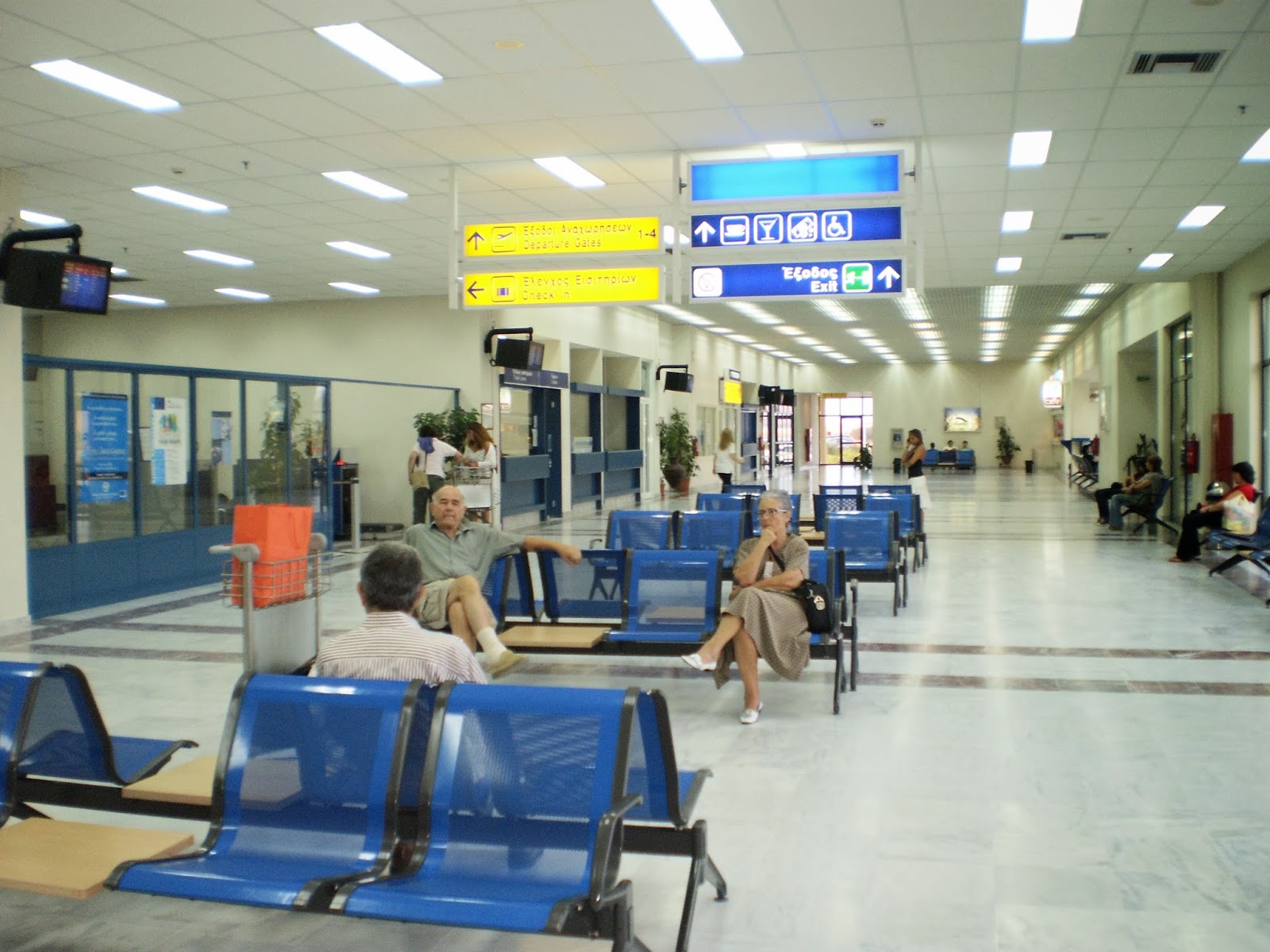


When you’re leaving a country you find airport procedures are very similar, but differences abound when you arrive. Entering Australia I usually mutter to Takis, ‘Welcome to fortress Australia!’ There, officiousness prevails, with huge notices instructing you about everything you can or cannot bring into the country (including the feathers in your hat). There are guards watching you at every turn of the corridor, and stern-faced officials and dogs that make searches of your bags.

It’s different in Greece. One time, for instance, we found the customs booths completely unmanned. There was not an official in sight. We stood bewildered with the other passengers, until one businessman knocked on a nearby office door, behind which eight customs officials were drinking coffee. In dismay they jumped up and rushed to their desks, just in time to avoid the disaster of hundreds of foreigners marching straight into their country.

Stopovers

Singapore


Our main stopover on the way to Athens is usually Singapore. Often it only involves the hour spent in the airport while the plane is cleaned and newcomers join us, but some years we have stopped over for a couple of nights. What I especially love about this city are the gardens, along the roadsides, and in two botanical sites. When there we will usually take the tour bus and get off at the old botanic gardens. Here I make a beeline for the orchid section - an acre or two of orchids of every kind.

Recently we have also visited the huge new botanic garden, ‘Gardens by the Bay’. Here, in its grounds and in two huge green houses (plane hanger size), are displays of plants from around the world.

If you can think of a place that’s the complete opposite of Athens, it’s Singapore, and we’d always appreciated this contrast. Singapore is ordered, clean, and full of tall trees and exotic orchids. Athens is a city where there are few trees, a lingering smell of cigarettes, and pavements are covered with splodges of gum. Whereas in Singapore people keep the road rules, and the no littering rules are strictly applied, in Athens nobody toes the line or is expected to.

In Greece the traffic is disorganized and Greek signs are often hard to read – even though they’re in at least two scripts, Greek or Latin, with English also often thrown into the mix. However, there are positive aspects of arriving in Athens – in Singapore the slim well-dressed Singaporeans make me feel huge and unkempt, whereas in Athens I suddenly feel slim and neat again!

Athens
Acropolis


Bouganvillia on an Athenian House


Arriving in Athens we either stay out at the airport and fly on to the island as soon as possible, or we’ll spend a day or two catching up with Takis relatives in the city. If we take the later course we’ll also do some sightseeing, perhaps go to the beautiful new museum on the Acropolis, or to a taverna in one of the city squares.

England


               Canterbury Cathedral


Isle of Wight and Somerset


There have been a few years I have taken a break from the Lemian summer heat and gone to visit relatives in England. On a couple of times I’ve managed to time my visit to go to old school and college reunions, and once to my aunt’s sixtieth wedding anniversary.  But I have to admit that over the years of rebuilding the house the attraction has mostly been to have a few days respite from heat, dust, mice and mosquitoes. I find that immediately I’m in the cool air of England I relax, and my hives clear up. I also take the opportunity to shop for things we need. One year, for instance, I came back with some English mousetraps known as ‘Little Nippers’.

Travel Information


Airlines  
There are daily flights connecting the island of Lemnos from Athens, Thessaloniki and Mytilene. 
Ferry boats 
These reach Limnos from the ports of Pireus, Thessaloniki, Lavrio, Kymi, Kavala, Moudania. Plus the islands, where the ferry boat stops, e.g. Samothraki, Mytilini (Lesvos), Agios Efstratios, etc.. 


Cars
If you have your own car you can bring it on the ferry. The roads on Limnos are fairly good, and on the whole the drivers are not too crazy or dangerous. But if you want to go to special places or to the beach with the car you need to be prepared to drive a few kilometers on dirt roads. 
Taxis
There are taxis in Myrina either waiting at the port when a ship comes in, or else at their own platia in the upper part of the Agora.  Taxis (but no busses) are also waiting at the airport when a flight comes in.

Visitors - coming and going


Every year, for the past ten years of this renovation project, we have entertained at least ten visitors a year, so we’ve become very used to giving out travel information.  This will change from year to year, and from winter to summer, so we generally need to check and let them know the latest time schedules.


It may seem paradoxical, seeing that we first thought of turning the house into a hotel, but we have gradually begun to feel conflicted about having so many guests. We are very happy to provide a summer holiday hostel for our extended family, but at the same time we have found ourselves working and entertaining as though it was a hotel, without the benefits of an added income! However, we do enjoy having visitors, and we love cooking up wonderful meals. Why else would we have renovated so many bedrooms and put in a good sized family kitchen? And, why would we still be planning to put in another bathroom? Yet…?


Of course this dilemma is partly our fault, for inviting so many folks to come and visit us! The house is now very comfortable and the sea close by thus many family and friends see it as the perfect holiday destination. Consequently we often find we have seven or eight sitting down for the main meal – for months on end!

Sunday, 9 March 2014

Traveller's Tales 1


Traveller’s Tales 1.

Roads and Pavements


Road Rules in Athens


In Athens, alongside the glossy and the renovated, I could see car wrecks and broken pavements, and roaming through the streets was an assortment of cats and dogs, tourists and students, together with colourful and often illegal street vendors. As we walked down the mall we couldn’t help but ponder the ways this city differed from Melbourne.


Although both cities have approximately the same population, with many immigrants, Melbourne is amazingly orderly. Here life appeared to be chaotic. We walked past African street sellers with goods spread out on blankets, past gypsies begging outside churches. On the pavements we had to squeeze past parked motorbikes, and to get across the road we had to squash between the cars that cram all the streets. It struck us that in Athens all of the twenty-first-century problems of population increase and influx of immigrants (legal and illegal) are immediately visible, whereas in Australian these aspects, though also problematic, are less evident.

And in Lemnos, a typical picture. A car parked under a no-parking sign!

Greeks, being free spirits, do not like rules, on the roads or on the pavements. They have it worked out that you don’t have to just walk on the right (as in most of Europe), or the left (as we do in Australia and England) they speed into any gap there is. I have to say I was filled with wonder when I saw the skilled manner by which ‘the swerve’ is put into practice, by both pedestrians and taxi drivers! Though exciting, I found this unscrupulous rule-breaking often a little too exciting for my English-Australian sensibilities. However one Greek-Australian, recently returned to Athens, told a reporter that he loved the challenge of driving in Athens. He said he felt more at home in this chaos than in rule-driven Melbourne. The fact that Greece has an above average number of deaths on the road, amounting to the demise of a whole village each year, does not seem to make any difference to Greek behaviour. They are either too proud of their macho life-style to let the possibility of dying stop them, or like this Greek-Australian more at home in what I see as chaos.
Pavements

Lemian Roads

During our years of coming here not all changes have been troublesome. We’ve noticed some welcome changes – some possibly the result of the pressures that Greece is currently facing. In the early years of our residence dog-fights between the Turkish and Greek air forces were regularly played out above the house. Even two or three years ago large numbers of soldiers were stationed on the island and we regularly encountered slow old army trucks on the roads. Now there are hardly any soldiers to be seen and it’s rare to find those army trucks holding up the traffic. It’s not hard to reason that this change might be connected to the disastrous Greek economy, which has led to a reduction in government spending on the military.

In Lemnos pavements aren’t the preserve of walkers; in fact, a new pavement is a siren call to all and sundry to fill it up with many kinds of land flotsam and jetsam. Once I told Takis that I was going to the council to complain. I told him, ‘There might be a lot of national pride in Greece, but not much civic pride! I’m tired of having to walk on the roads and keep a continuous look out for an aftokineto (car) bowling around the corner at high speed, or having to jump out of the way when a Lemnian kalikantzari roars past on his motorcycle.’

This was one of my biggest annoyances on the island, as was the general disregard of road rules. This, however, was something I couldn’t do anything to about. It seemed to go beyond drivers of vehicles and include all the islanders, for even old ladies with walking sticks and young women with prams seemed happy to share the road with cars. I found that I resented doing this, and having to jump out of the way of vehicles, even if there was a pavement. This was because it would be filled with flowerpots, chairs, rubbish bins, large signs, trees, parked cars, motorbikes, and more.


Lemian Roads, a few straight, many narrow, and some winding through fields


Though our particular road is straight, and wider than many and so many use it as ‘city bypass’. Thus the noise of cars and motorbikes bouncing up or down the cobbles can be horrific. We have had to deal with this by putting in double glazed windows. And, as is sensible in summer, we’d try to close shutters and windows during the day and open them at night. However, often at night, when we open up the house we find that, after a short while we have to rouse ourselves to shut the bedroom windows to keep out the noise of those motorbikes and cars rushing up our cobbled street.


Digging up Roads (Comments on a postcard sent to the grandchildren.)
Hallo from the island of Lemnos.

I went down to the old town of Myrina today. It is not easy to shop in the main street (the Agora) at the moment as they have been digging up the old cobbles stones to put down new pipes. This work has been going on for a long time as every time the workers make a hole they find some very ancient pipes or stones. That means that they have to call for an archaeologist to come and check it out, and then usually the archaeologist  says that the stones and pipes are very old, perhaps Byzantine or Ottoman, and then everyone has to stop work while the archaeologists take pictures and make drawings. 


Planes 

Having encouraged our grandchildren to visit us they did come. A very long and tiring journey for little ones!

Excitedly leaving Melbourne


                      On board, TV and lollies!


Arriving in Athens


Home again, with a beloved cat


A story from the book of our Greek Adventures

(Flying to Lemnos was also sometimes a very suprising experience for us.)

‘When leaving a country you find airport procedures are very similar, but differences abound when you arrive. Entering Australia I usually mutter to Takis, ‘Welcome to fortress Australia!’ There, officiousness prevails, with huge notices instructing you about everything you can or cannot bring into the country (including the feathers in your hat). There are guards watching you at every turn of the corridor, and stern-faced officials and dogs that make searches of your bags.
It’s different in Greece. This time, for instance, we found the customs booths completely unmanned. There was not an official in sight. We stood bewildered with the other passengers, until one businessman knocked on a nearby office door, behind which eight customs officials were drinking coffee. In dismay they jumped up and rushed to their desks, just in time to avoid the disaster of hundreds of foreigners marching straight into their country. ‘


Ferry Adventures 

Sometimes our visitors take a trip to a nearby town or island, by the large car ferry, or on a small tourist boat.


Another story from my book about our Greek adventures. 

(A ferry trip Takis and I took to Saloniki and Kavala. )

‘The boundaries of organised behaviour are continually breached on a Greek ferry. Children play chasey between chairs, most smoke in non-smoking areas, others ask you to move so that they might sit closer to their relatives. In fact life soon begins to take on the aspect of a Greek village, with small gossip groups, larger card playing groups forming all around you. That this would happen seemed expected by authorities who in no way try to organise and change things.
This group holiday mentality begins, en masse, and by tacit agreement with the authorities on board as the crowd gathers on the quayside. All gathered there in good time as there is always the possibility that the ferry will be in time, but by the time the ferry actually arrives the group is tired of waiting and milling anxiously. Thus, as soon as the ferry docks, before the cars or folk on board unload, the crowd surges forward. Parents are holding children and bags, not worrying that they are in the path of the outgoing cars, or incoming super-sized trucks, in spite of guards blowing whistles and trying to move them back. The whole lot, at some given moment, then push forward and begin to move up the ramp.
No one checks the tickets. It would be an  impossibility as the crowd converges on the small doorway leading the flight of stairs leading to the lounges above. Those who do this trip often (all the Greeks living in this part of the Aegean) know which are the best areas to make for, Never mind if you have a second class ticket and that is in the first class area. All rush to the favoured seats. Families send in the fastest member to claim whole spreads of seats. The idea is that they are for those parking cars and coming in later. This would not be so bad if someone did actually come in later!

What we found, was that though having bought first class tickets we were too late to get a seat and had to sit on upright chairs in a passageway between long lounge chairs where an aggressive young coupled claimed the whole bench, with bags spread out on either side of them. When Takis enquired of the glorious dyed blond Greek woman she answered that a crowd would be joining them later. She then slowly removed her shoes, slipped on something comfortable and arranged a few things for a pillow and lay down, sleeping nearly all the way to the next island. Finally when there seemed no chance that she would be challenged again she wandered off, fixed her hair down in the ladies, then wandered back to make a few phone calls. I have noticed something of the same behaviour from people from very poor overpopulated countries who obviously were worried that seats would not be honoured, and who felt they had to push to the front of the line at each stop. I presumed it was in case they were refused admission. Yet this is not the case in Greece. Here there seems to be a distain for rules, just because they are rules, even if those rules actually make life more pleasant!’

Tuesday, 4 March 2014

Beautiful Isle of Lemnos


 Beautiful Isle of Lemnos


from

The Old Ships by James Elroy Flecker 


I have seen old ships sail like swans asleep
Beyond the village which men still call Tyre,
With leaden age o’er cargoed, dipping deep
For Famagusta and the hidden sun
That rings black Cyprus with a lake of fire;
And all those ships were certainly so old
Who knows how oft with squat and noisy gun,
Questing brown slaves or Syrian oranges,
The pirate Genoese
Hell-raked them till they rolled
Blood, water, fruit and corpses up the hold.


The Argonauts by D.H. Lawrence 


They are not dead, they are not dead!
Now that the sun, like a lion, licks his paws
And goes slowly down the hill:
Now that the moon, who remembers, and only cares
That we should be lovely in the flesh, with bright, crescent feet
Pauses near the crest of the hill, climbing slowly, like a queen
Looking down on the lion as he retreats-

Now the sea is the Argonauts’ sea, and in the dawn
Odysseus calls the commands, as he steers past those foamy islands;
Wait, wait, don’t bring the coffee yet, nor the pain grille.
The dawn is not off the sea, and Odysseus’ ships
Have not yet passed the islands, I must watch them still.


from

The Odyssey by Homer, book V


A great wave drove at him with toppling crest
Spinning him round, in one tremendous blow,
And he went plunging overboard, the oar-haft
Wrenched from his grip. A gust that came on howling
At the same time broke his mast in two,
Hurling his yard and sail far out to leeward.
Now the big wave a long time kept him under,
Helpless to surface, held by tons of water,
Tangled, too, by the seacloak of Kalypso.
Long, long, until he came up spouting brine,
With streamlets gushing from his head and bear;
But still bethought him, half-drowned as he was,
To flounder for the boat and get a handhold
Into the bilge- to crouch there, foiling death.


from

Don Juan by Lord Byron

The isles of Greece, the isles of Greece!
Where burning Sappho loved and sung.
Where grew the arts of war and peace, -
Where Delos rose, and Phoebus sprung!
Eternal summer gilds them yet,
But all except their sun is set.


Sunday, 2 March 2014

Unpredictable March


Unpredictable March


March in Australia - Autumn, Rain, Lent, Pancakes, 

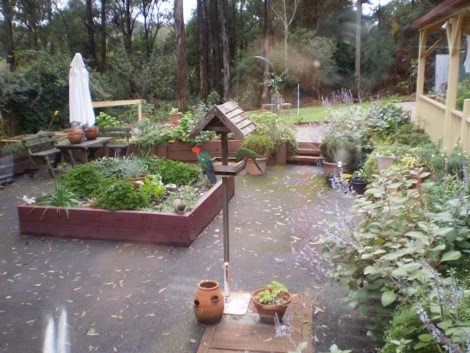
rain in an Australian garden


Now that March has arrived, and it is nearing the time that Takis and I will be returning to the island of Lemnos, we are checking the weather in Lemnos. March is that uncertain time of the year, in Lemnos as here in Australia. In March, in both countries, the weather is unpredictable and can turn cold or warming from week to week.


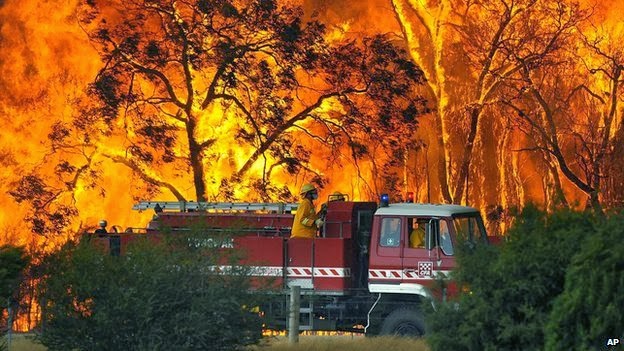
It is gradually getting colder in Australia and we are no longer on edge, checking the surrounding countryside for fires. We’ve had a good autumn rain and so we just  check the fire monitor now and then, and it usually only tells us the danger of fire is low to moderate, or perhaps high, but not severe or extreme any more. However, the garden still needs care and it can dry out quickly, and I have not stopped watering the pots yet.


In an article written by Jim Carey for BBC he describes the way the Australian countryside has changed since the coming of the Europeans, and become more fire-prone with eucalyptus trees taking over sections of the country.
Carey quotes a historian who declares that Aborigines managed the land differently, by continually clearing and producing grasslands that not only attracted animals they could hunt but also making massive firebreaks that preventing the kind of destructive fires we see today.

Jim Carey poses these questions at the end of his article,
There is an odd tension here, which rather unusually pitches conservation groups against an ancient knowledge. What exactly is the "natural" environment of Australia?
He asks if the massive forests of euclypstus trees, which have proliferated since 1788, are ‘natural or were the pastures gardened by the Aborigines for the tens of thousands of years prior to that more natural?


A banksia bush seed pod only opens in the heat of a flame. These seeds are only released by the heat of flames which is another reminder of how, along with the gum tree, Australia has evolved with, and forged by, fire.


     Eucalyptus Trees

Wikipedia has an alphabetical list of 734 Eucalyptus species and 3 hybrids.


The most prolific tree in the Australian bush is the iconic eucalyptus, nicknamed the 'gum tree' and described by one fireman as 'a living firebomb'. Carey writes, 'The bark of the tree falls away in thin flammable sheets - a touch paper to any passing spark - whilst the air in and around a eucalyptus forest hangs with the oil for which the tree is renowned. It creates an incendiary haze, which sometimes causes the air to burn by itself.'
Eucalyptus is a novel by Australian novelist Murray Bail.

Eucalyptus tells the story of Ellen Holland, a young woman whose "speckled beauty" and unattainability become legend far beyond the rural western New South Wales town near the property where she grows up. Her protective father's obsession with collecting rare species of Eucalyptus trees leads him to propose a contest - the man who can correctly name all the species on his property shall win her hand in marriage. When Mr. Cave arrives, a botanical genius, he appears to be the only man on earth capable of success. Unfortunately,  just as Cave nears his goal, Ellen finds love elsewhere.


The book won the 1999 Miles Franklin Award and the 1999 Commonwealth Writers' Prize.

 March in Lemnos - Spring, Rain, Lent, No Meat 


Rain and Thunder Storms: Temperatures between 11-14 C.

 While Takis and I do tend to follow the sun, and generally live with temperatures around 15-30C all year round, I should remind you that both Australia and Lemnos experience winter weather. The house in the Aegean, though beautiful in spring through to autumn, would be freezing during the winter months. 

I remember, before I emigrated to Australia, I once met an Australian who had bought some skis in London to take back with him. I was amazed, thinking that Australia could not have snowfields. I was wrong. In the same way, many of my friends and relatives cannot imagine snow, hail and sleet, in Greece, but I can assure you it gets very cold there too - though not perhaps not as cold as America has had this winter, but the wind chill on the island can be pretty bad.

 The Julian calendar


This calendar has a regular (common) year of 365 days divided into 12 months with a leap day added to the month of February every four years (leap year). This made the Julian year 365.25 days long on average, and needless to say, this extra .25 day caused several issues.


Julius Caesar Augustus


From Wikipedia
‘Although all Eastern Orthodox countries (most of them in Eastern or Southeastern Europe) had adopted the Gregorian calendar by 1924, their national churches had not. The "Revised Julian calendar" was proposed during a synod in Constantinople in May 1923, consisting of a solar part which was and will be identical to the Gregorian calendar until the year 2800, and a lunar part which calculated Pascha (Easter) astronomically at Jerusalem. All Orthodox churches refused to accept the lunar part, so almost all Orthodox churches continue to celebrate Pascha according to the Julian calendar (with the exception of the Estonian Orthodox Church and the Finnish Orthodox Church).’


The Greek Orthodox faith follows a modified Julian calendar to establish the date of Easter each year. Easter must fall after Passover, so it does not always or often coincide with the date of Easter in other faiths. However this year Greek Easter falls on the same day as the Catholic Easter. This is not until April 19-20. But in Greece the Lenten preparation for Easter is very important and many people observe the rule to abstain from meat, and dairy foods, which this year will be most of March.

 The Duration of Lent
This year Clean Monday is on the 3rd of March. This is the day that housewives spring clean, and it marks the first day of Lent.
The weeks of the Great Lent are:
First Sunday (Sunday of Orthodoxy)
Second Sunday (St. Gregory Palamas)
Third Sunday (Adoration of Cross)
Fourth Sunday (St. John of Climax)
Fifth Sunday (St. Mary of Egypt)
Palm Sunday through Holy Saturday and Easter Sunday

 Pancake Day. March 4
 

Many Christians in Australia observe Ash Wednesday as the first day of Lent. It is the beginning of the Lenten fast and is the day after Shrove Tuesday, also known as Pancake Tuesday or Pancake Day. I will make pancakes for breakfast tomorrow, not for any religious reason but because it reminds me of my English family's traditions.